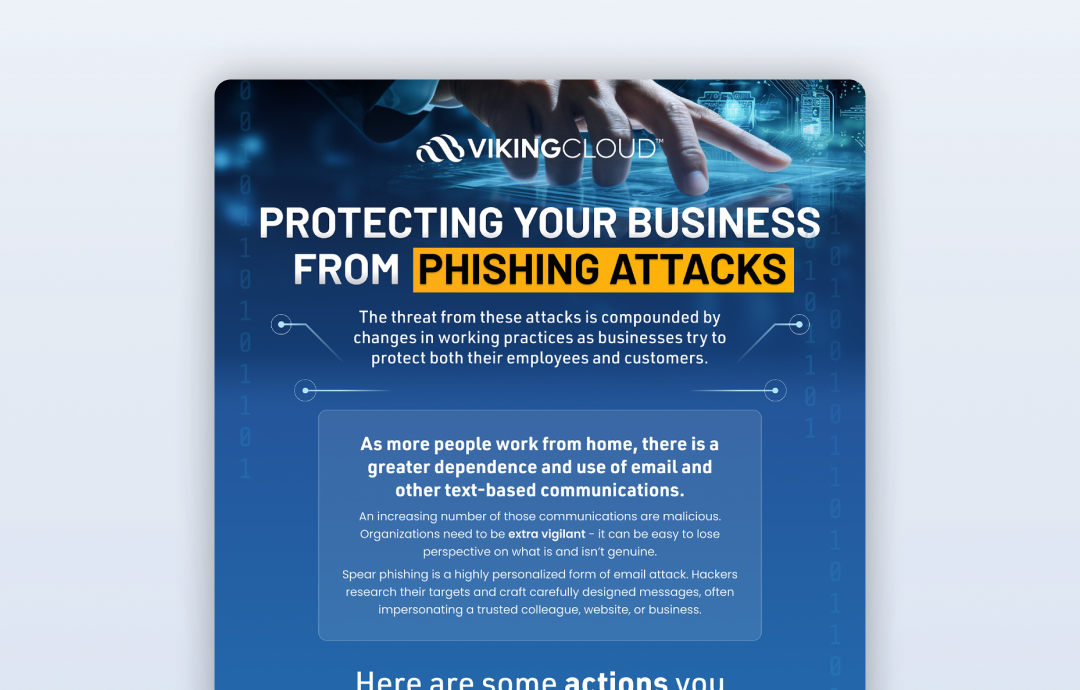
Phishing remains one of the simplest yet most costly threats facing small and growing businesses today. It doesn't require sophisticated hacking skills, just a convincing email, text message, or phone call designed to trick an employee into handing over a password, clicking a malicious link, or transferring money to the wrong account. For businesses running point of sale systems, handling customer data, or processing daily transactions, a single successful phishing attempt can lead to stolen funds, compromised customer information, or a shutdown of operations while the damage is contained.
Phishing attacks come in several forms, and recognizing them is the first line of defense. Email phishing usually involves messages that appear to come from a bank, supplier, or even a colleague, urging quick action such as resetting a password or confirming a payment. SMS phishing, often called smishing, is especially common in markets where mobile money is widely used, with fraudulent messages claiming a transaction failed or a prize was won, pushing the recipient to click a link or share a PIN. Phone-based phishing, or vishing, involves a caller impersonating a bank official, government agent, or IT support technician to extract sensitive information directly over the phone. More targeted attacks, known as spear phishing, focus on a specific employee, often someone in finance or management, using personal details to appear more credible.
The warning signs are often similar across these formats. Messages that create urgency, threaten account suspension, or promise unexpected rewards should raise suspicion immediately. Poor grammar, mismatched sender addresses, and links that don't quite match the organization they claim to represent are also common red flags. Legitimate banks, mobile money providers, and business partners rarely ask for passwords, PINs, or one-time codes through email, text, or phone calls, so any request of this kind should be treated as a warning sign ather than a routine inquiry.
Protecting a business from phishing starts with people, not just technology. Staff who handle payments, customer data, or company accounts should be trained to pause before clicking links or sharing information, and to verify unusual requests through a separate, trusted channel, such as calling a known number directly rather than replying to the message itself. Establishing a simple internal rule, such as never sharing passwords or PINs regardless of who is asking, removes the ambiguity that scammers rely on.
Technical safeguards add another layer of protection. Using strong, unique passwords for business accounts, enabling two-factor authentication wherever it's available, and keeping software and point of sale systems updated all reduce the chances that a phishing attempt succeeds even if an employee makes a mistake. Business email accounts benefit from spam filtering and, where possible, domain-level protections that make it harder for attackers to impersonate the company convincingly. Regular data backups also ensure that even in the event of a successful attack, the business isn't left without access to critical records.
Response matters as much as prevention. If a staff member suspects they've received a phishing attempt, the message should be reported internally rather than ignored, so others can be warned and patterns can be tracked. If sensitive information has already been shared, affected accounts should be changed immediately, financial institutions notified, and, where money has been lost, reported to the relevant authorities and payment providers as quickly as possible, since early reporting improves the chances of recovering funds.
For businesses using digital systems to manage sales, inventory, and customer records, phishing isn't just an IT concern, it's a business continuity issue. A compromised account can disrupt operations, damage customer trust, and create financial losses that take far longer to recover from than the few minutes it takes to build good security habits. Afrisap Limited designs its business management and point of sale systems with security in mind, and encourages every business owner to treat basic phishing awareness as seriously as locking the front door at closing time, since in today's environment, the biggest threats to a business don't always walk through the front door at all.
← Back to Blog & News