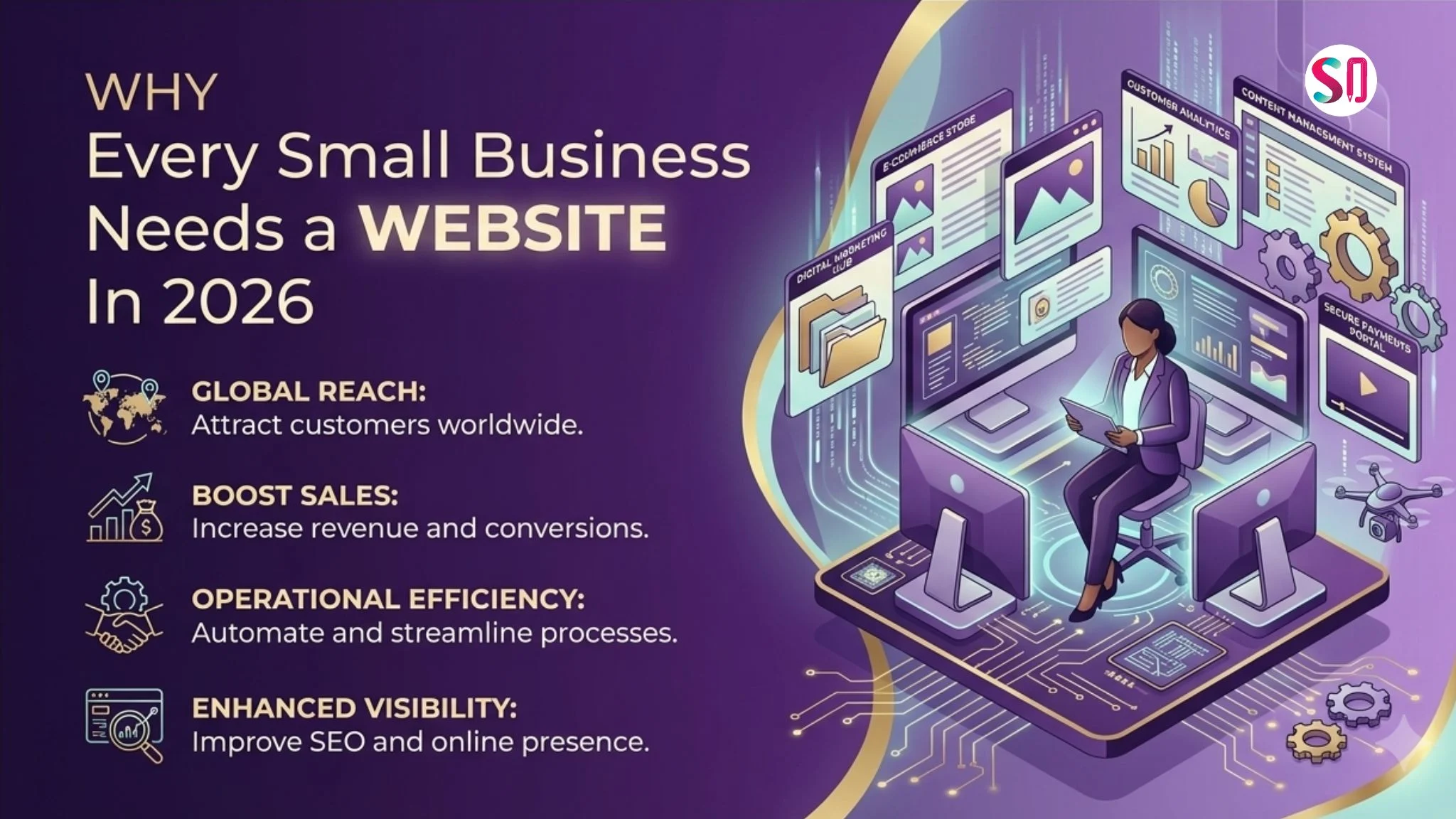
For a small or medium-sized business in 2026, a website is no longer a nice-to-have reserved for large corporations with big marketing budgets. It has become as fundamental to running a business as having a phone number or a physical address. Customers now research businesses online before ever walking through the door or making a call, and an SME without a website risks being invisible to exactly the people who are actively looking for what it sells.
The most immediate reason a website matters is credibility. When a potential customer searches for a business and finds nothing beyond a social media page or, worse, nothing at all, it raises doubts about whether the business is established, trustworthy, or even still operating. A well-built website signals legitimacy in a way that a WhatsApp number alone cannot, giving customers confidence that they are dealing with a real, professional operation rather than an informal or fly-by-night seller.
A website also puts a business in control of its own information, rather than leaving it entirely dependent on third-party platforms. Social media algorithms change constantly, accounts can be suspended, and posts get buried within hours. A website is a permanent, owned space where a business decides exactly what customers see, from product listings and pricing to hours of operation and contact details, without being at the mercy of a platform's rules or reach.
Discoverability is another major advantage. Search engines like Google are often the first place people turn when they need a product or service, and a business with no website simply doesn't appear in those results, no matter how good its offering is. A properly optimized website allows an SME to be found by people actively searching for exactly what they offer, whether that's a supermarket in a specific neighborhood, a clinic offering a particular service, or a hardware store carrying a hard-to-find part. This kind of visibility reaches customers a business would never have found through word of mouth alone.
A website also extends a business's operating hours in a way physical presence cannot. Customers can browse products, check prices, read about services, or fill out an inquiry form at any time of day or night, even when the shop is closed or staff are unavailable. For businesses that sell physical goods, this can also open the door to online ordering and e-commerce, allowing sales to continue beyond the walk-in customer base and even beyond the local area entirely.
Cost has also shifted the equation in favor of SMEs. Building and maintaining a website used to require significant technical skill and budget, but that barrier has largely disappeared. Modern website platforms and affordable development services mean a small business can have a professional, functional website at a fraction of the cost it would have required even a few years ago, making the return on investment far easier to justify.
A website also works hand in hand with the other digital tools a business already relies on. Integrating a website with a point of sale and business management system allows a business to display real-time stock availability, accept online bookings or orders, and keep customer records synced across both online and in-person interactions. Rather than existing as a separate marketing expense, the website becomes part of the same operational backbone that runs the day-to-day business.
Ultimately, a website is one of the few business investments that works continuously without needing to be manned, restocked, or opened and closed each day. It represents the business at its best, around the clock, to anyone who comes looking. For SMEs competing against larger, better-resourced businesses, a well-built website is one of the most affordable ways to level the playing field, and in 2026, going without one is no longer a cost saved but an opportunity lost. Afrisap Limited builds websites alongside its business management and point of sale systems, helping SMEs put their strongest, most professional face forward, both online and at the counter.
← Back to Blog & News